
Merida vs San Miguel de Allende vs Tulum vs Ajijic: Where to Live in Mexico

Merida is a hot, low-lying colonial city with an airport in town. San Miguel de Allende is a high, dry arts town with cool nights and steep cobblestone streets. Tulum is a Caribbean beach town built around nature, with newer neighborhoods still growing. Ajijic is a mild lakeside village on Lake Chapala with a long-established expat community. Choose the one whose climate and daily pace match the week you want to live.
Table of Contents
- How do the four settings compare at a glance?
- Merida vs San Miguel de Allende: which suits you?
- Merida vs Tulum: city or coast?
- Ajijic vs Merida: mild lakeside or warm city?
- Lake Chapala vs San Miguel de Allende: which highland town?
- How do your priorities change the shortlist?
- What changes when you move from place to property?
- Where does The Golden Life fit?
- Frequently Asked Questions
Most Americans comparing Mexico narrow it down to a handful of places, and these four come up again and again. They are very different: a city, a highland town, a beach town and a lakeside village. Climate, altitude and airport access separate them before you look at a single home.
This guide compares them on the same points, then shows how your priorities change the shortlist.
How do the four settings compare at a glance?
| Merida | San Miguel de Allende | Tulum | Ajijic | |
|---|---|---|---|---|
| Setting | Colonial state capital, Yucatan | Historic highland town, Guanajuato | Caribbean beach town, Quintana Roo | Lakeside village, Lake Chapala, Jalisco |
| Altitude | Near sea level | About 1,900 m (6,200 ft) | Sea level | About 1,500 m (5,000 ft) |
| Climate | Hot and humid; hottest April to May | Dry, warm days, cool nights; cold winter nights | Hot and humid; rainy and hurricane season June to November | Mild most of the year; rainy June to September |
| Nearest airport | Merida (MID), in the city | Queretaro (QRO) or Bajio (BJX), about 1 to 1.5 hours | Tulum (TQO); Cancun (CUN) about 2 hours | Guadalajara (GDL), about 45 minutes |
| Pace of life | Full city with services, culture and food | Walkable centre, galleries, events, visitors | Beach, cenotes and jungle; busy in high season | Small-town, slower, lakeside promenade |
| Typical homes | Restored colonial houses in Centro; gated communities to the north | Colonial homes in town; villas and new communities outside it | Condos in Aldea Zama and Region 15; jungle and beach villas | Village homes, lake-view houses, condos and gated communities |
| Foreign buyer structure | Direct ownership in the city; bank trust on the coast | Direct ownership | Bank trust (restricted zone) | Direct ownership |
Merida vs San Miguel de Allende: which suits you?
The biggest difference is climate. Merida sits almost at sea level and is hot for much of the year, with April and May the hardest months. San Miguel de Allende sits about 1,900 m (6,200 ft) up, so days are warm and nights are cool, and winter nights can get cold enough to need heating.
The second difference is scale. Merida is a state capital of about a million people, with an international airport in the city, large hospitals and everyday services close at hand. San Miguel de Allende is a smaller town whose historic centre is a UNESCO World Heritage site. Life there centres on walking, galleries, restaurants and events, and the nearest airports are an hour or more away.
Practical point: San Miguel's centre is steep and cobbled. If walking on uneven ground is a concern, Merida's flat streets are easier day to day.
Choose Merida if
You handle heat well, want a city with full services and a home airport, and like the idea of a restored colonial house or a newer home in north Merida. Developments in our collection here include Mahanyé and Entre Selvas.
Choose San Miguel de Allende if
You want a cooler, drier climate and a walkable town built around art and culture, and you do not mind hills or a drive to the airport. Profiles here include Alborada and La Santa Vid.
Merida vs Tulum: city or coast?
Both are on the Yucatan Peninsula and both are hot and humid, so the choice is about lifestyle rather than weather. Merida is an established inland city. Tulum is a beach town about 3.5 hours' drive east, where life revolves around the sea, cenotes and the jungle.
Tulum has grown fast, and some newer neighborhoods such as Aldea Zama and Region 15 are still being built out. Ask which roads, services and amenities are running today and which are planned. Tulum is also on the coast, so it sits in the restricted zone (foreign buyers use a bank trust) and is more exposed during the June to November hurricane season. Seaweed (sargassum) can also affect beaches in some months.
Merida offers more year-round city life and is less dependent on tourism. Many Merida residents spend weekends on the coast at Progreso, about 40 minutes north, instead of living on the beach full time.
Tulum profiles in our collection include Adonahi Tulum, Selva Norte and Zénesis.
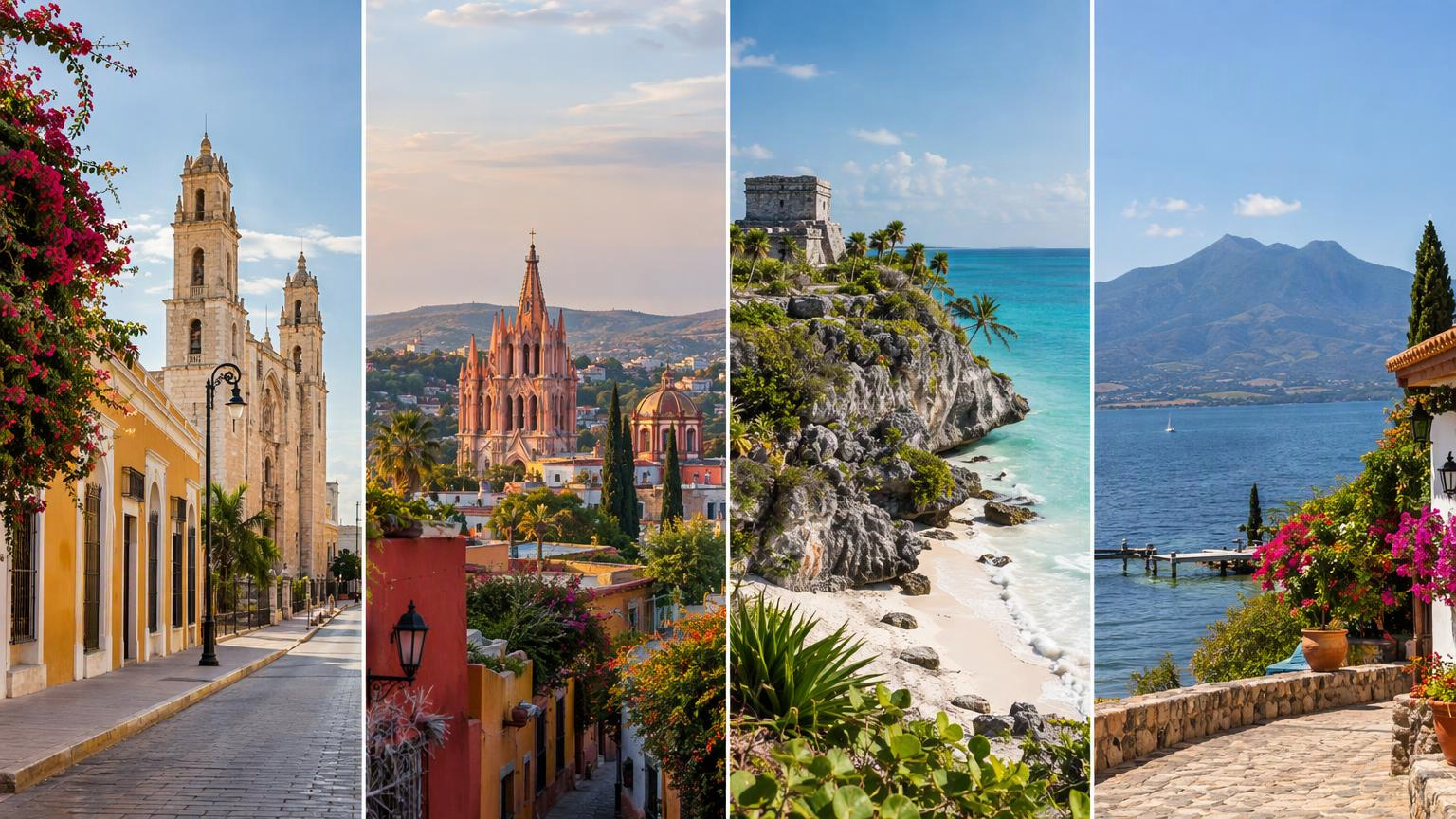
Four very different settings: city, highland town, beach town and lakeside village.
Ajijic vs Merida: mild lakeside or warm city?
Ajijic sits on the north shore of Lake Chapala, Mexico's largest freshwater lake, at about 1,500 m (5,000 ft). The altitude keeps temperatures mild for most of the year, which is the main reason many retirees choose it. Merida is far warmer and more humid.
Ajijic is a village, not a city. The malecón (lakeside promenade), the plaza and the small centre are walkable, and the Lake Chapala area has one of the longest-established American and Canadian communities in Mexico. For a big hospital, a large shopping trip or an international flight, residents drive to Guadalajara, about 45 minutes to an hour away.
Merida has more of everything close by: hospitals, shops, culture, restaurants and its own airport. The trade-off is the heat.
Ajijic profiles in our collection include Piedraviva Ajijic.
Lake Chapala vs San Miguel de Allende: which highland town?
Both are highland towns popular with American retirees, and both avoid the coastal heat. The differences are in setting and pace.
| Lake Chapala (Ajijic) | San Miguel de Allende | |
|---|---|---|
| Altitude | About 1,500 m (5,000 ft) | About 1,900 m (6,200 ft) |
| Climate | Mild; little seasonal change | Drier; cooler nights and colder winters |
| Terrain | Mostly flat near the lake | Steep, cobbled centre |
| Big-city access | Guadalajara about 45 minutes | Queretaro about 1 hour |
| Feel | Quiet, lakeside, settled expat community | Busy, arts and events, more visitors |
How do your priorities change the shortlist?
Say you plan to spend winters in Mexico now and may move full time later. You want mild weather, easy flights home and a social community you can join.
Ajijic and San Miguel de Allende fit the mild-weather goal. Ajijic adds flat streets and a short drive to Guadalajara's airport. San Miguel adds more culture but colder winter nights and a longer airport drive. Merida is warm in winter, which is when snowbirds visit, but its summer heat matters if you later move full time. Tulum suits beach living but is the most tourist-driven of the four.
For this person, Ajijic is the first place to visit, with San Miguel de Allende second. Change the goal to city life and culture with a home airport, and Merida moves to the top.
| Setting | Fit for this goal | Check on a visit |
|---|---|---|
| Ajijic | Strong: mild all year, flat, near GDL | Daily errands, healthcare in Guadalajara |
| San Miguel de Allende | Good: cooler, cultural | Winter nights, hills, airport drive |
| Merida | Good for winter only | Spend a week there in May |
| Tulum | Weaker for a full-time move | What is built and running now |
Not sure which setting fits?
What changes when you move from place to property?
Once you have a favourite setting, the next questions are about the property itself: what you are buying, how you can use it and what it costs to keep.
Full ownership, fractional ownership, timeshare and land are different products, even in the same town. In Tulum and other coastal areas, foreign buyers hold property through a bank trust. Ask for the ownership structure, HOA or community fees, rental rules and exit terms for any specific property. Our guides to the restricted zone and bank trust and verifying a developer cover these steps.
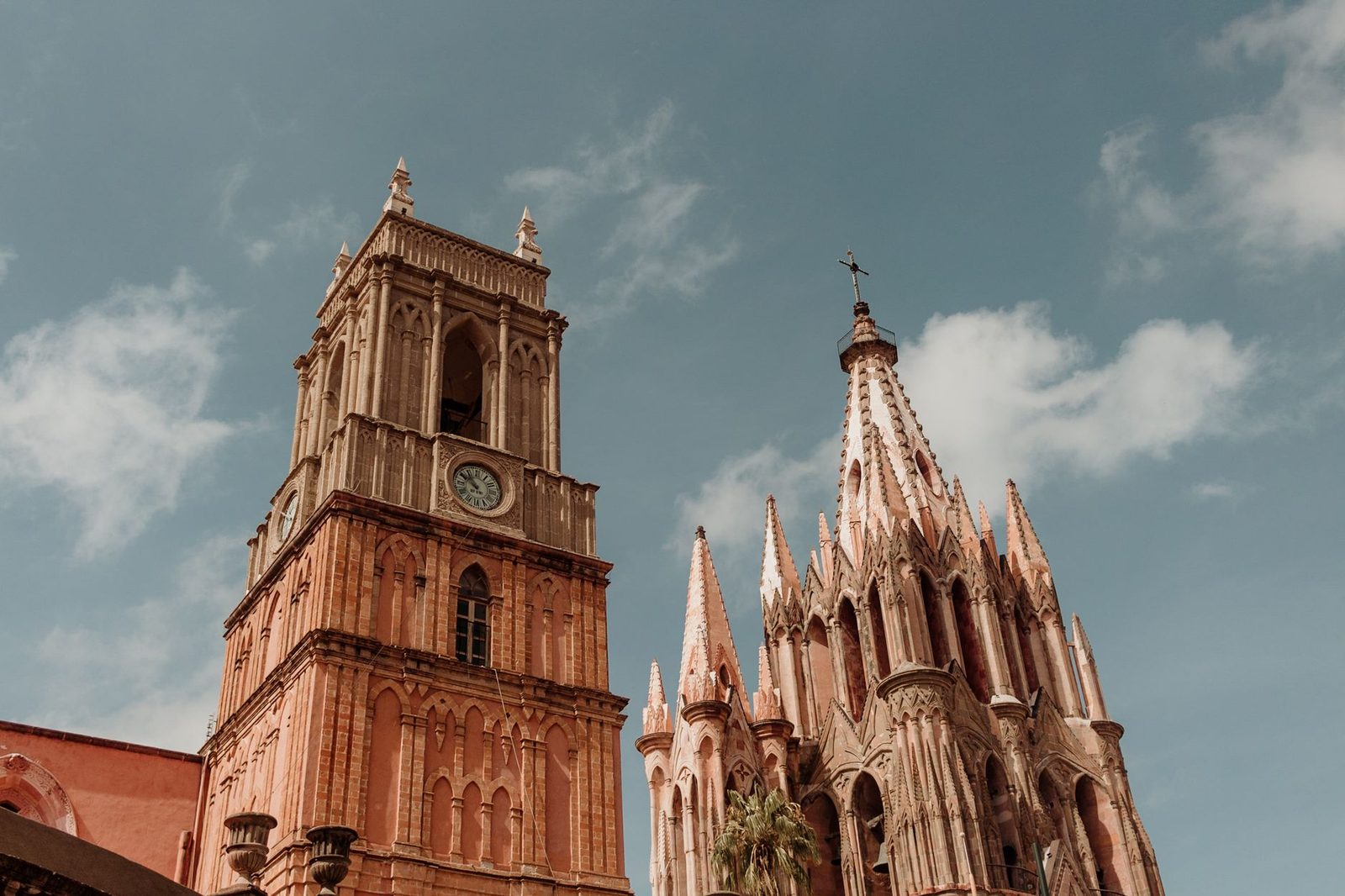
San Miguel de Allende's historic centre. Photo: Chris Luengas / Pexels
Where does The Golden Life fit?
The Golden Life starts with the life you want, then points you to settings and properties that match it. Browse the Mexico Property Collection for developments in all four settings, read the Living Well in Mexico guide for more on each place, or download the Next-Chapter Planner to plan a visit.
Property profiles are a starting point. Confirm current availability, pricing and terms, and get independent legal and tax advice before you commit. Nothing here is a promise of returns, rental income or resale value.