
Beachfront property in Mexico: the restricted zone and bank trust

Yes, Americans can buy beachfront property in Mexico, but the ownership structure depends on location and circumstances, including special structures in restricted coastal and border zones. A bank trust, called a fideicomiso, is part of that discussion. It does not replace review of the property's boundaries, permitted use, condition, or transaction documents by qualified independent professionals.
Table of Contents
- What does the restricted zone mean for a beachfront search?
- What does a bank trust explain, and what does it leave separate?
- Does beachfront mean the beach is part of the purchase?
- Which coastal property choice matches the experience you want?
- A buying example: when the view matters more than the shoreline
- Why the fideicomiso annual fee is only one budget question
- How The Golden Life connects the property search to everyday life
- Frequently Asked Questions
Buying beachfront property in Mexico involves several separate questions. Can a foreign buyer acquire the relevant rights? What land or unit is included? Does the advertised beach experience match the access and use supported by the documents?
Those questions matter whether you want a retirement home or a place for occasional visits. Understanding the restricted zone helps frame the ownership discussion, but it cannot tell you whether a particular home fits your daily life. This article provides general educational information, not legal, tax, financing, insurance, or investment advice.
What does the restricted zone mean for a beachfront search?
The restricted zone concerns the legal geography of foreign ownership. It is not a description of the property's view, its quality, or whether it touches the sand.
A March 2, 2006 article in the Illinois Business Law Journal described the zone as land within 31 miles of the ocean or 62 miles of an international border. That historical description explains why the topic extends beyond beachfront homes; it is not a current legal determination for any parcel.
A home set inland can still raise the restricted-zone question. So can a property without an ocean view in a border region. Moving away from the sand does not, by itself, establish which ownership structure applies.
For your search, separate the destination from the parcel. A regional description helps you understand lifestyle and access, while the actual property's location and legal circumstances belong in a qualified independent legal review.
The practical implication is simple: do not compare beachfront and inland homes on the assumption that one requires a special structure and the other does not. First understand what you are comparing, then have the applicable ownership route established for the actual property.
Legal geography is one part of a beachfront search. How a destination fits your everyday life is another.
What does a bank trust explain, and what does it leave separate?
A fideicomiso is a bank-trust structure discussed in connection with foreign residential purchases in the restricted zone. In general terms, the bank's trustee role and the buyer's beneficiary role are different roles, rather than the same person holding direct title.
The important distinction for a beachfront search is between the structure used to hold property rights and the quality of the property being acquired. A trust is not a substitute for examining the underlying transaction.
Trust-related questions concern the agreement, the parties, the rights described, and the procedures that apply. Property-related questions concern the land or unit, boundaries, title documentation, existing obligations, physical condition, and intended use.
These categories can interact. For example, the way a buyer expects to use a home may matter to the legal analysis, but labeling it an investment does not establish the appropriate structure. Qualified independent legal and tax professionals can explain how current rules apply to the specific circumstances.
Statements such as "you can rent it," "you can remodel it," or "you can pass it on" also need context. The ownership arrangement, relevant permissions, property rules, and individual circumstances may all matter; a broad statement about a trust is not a complete answer.
This is why the first buying decision should not be which bank to use. It should be whether the property category and intended use make sense, with the ownership structure and transaction then reviewed on their own terms.
Understanding a bank trust is separate from deciding whether a coastal destination and property fit your plans.
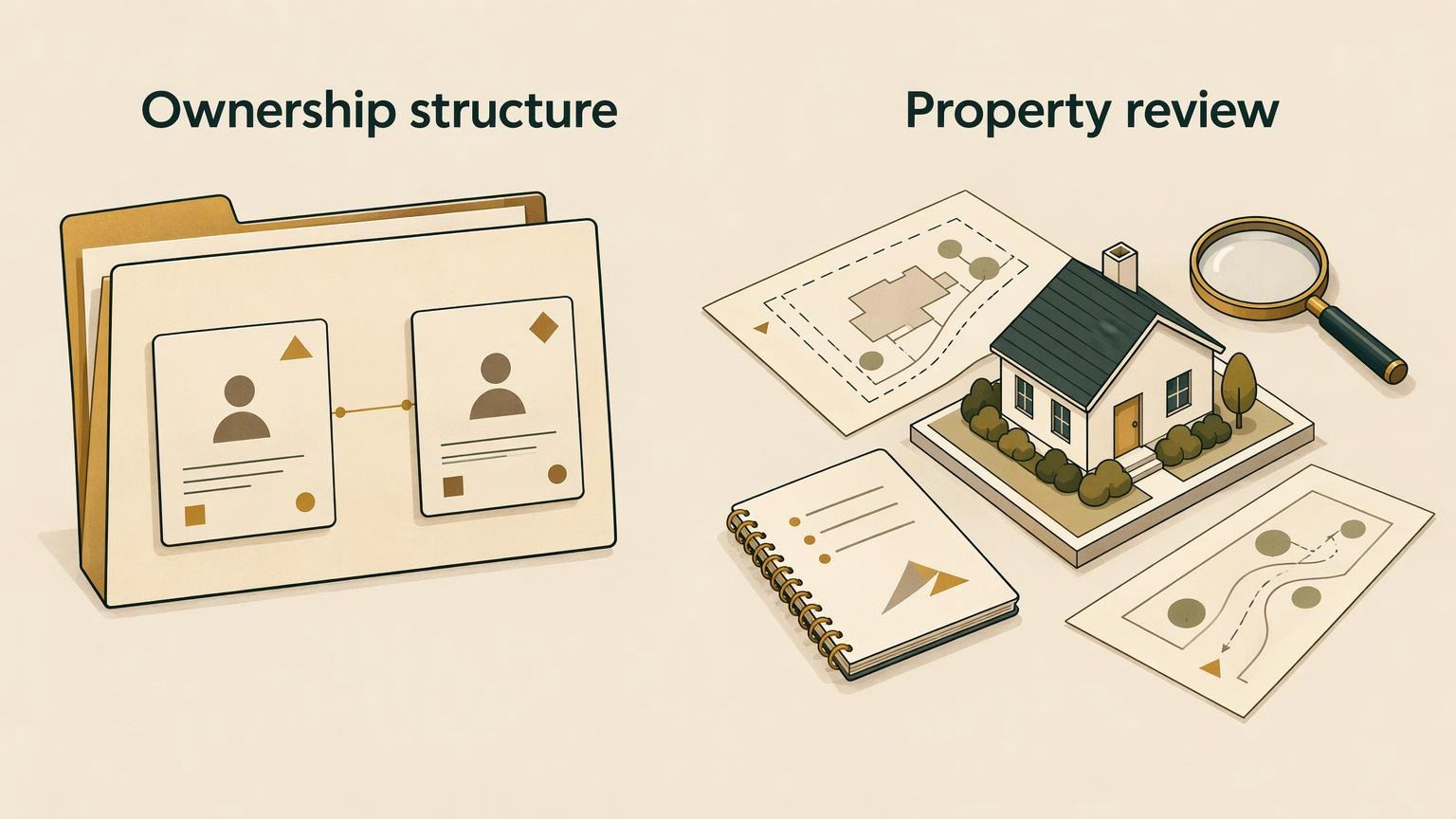
Illustration separates ownership structure, shown as linked role cards in a folder, from property review, shown as a house model with sketches, a notebook and a magnifying glass.
Does beachfront mean the beach is part of the purchase?
No. The word beachfront does not, by itself, establish that the sand, shoreline, access route, or every visible outdoor area is included in the transaction.
There are separate layers to examine: the property's documented boundaries, any shared areas, the route used to reach the shore, and the status of land along the water. Current coastal rules and the documents for the particular parcel require qualified independent legal and technical review.
A photograph can show a terrace facing the sea without explaining those layers. Likewise, an advertisement describing a private beach should not be treated as proof of exclusive legal rights over the shoreline.
Separate the view from the access
A view describes what you see. Access describes how you get somewhere and under what arrangements. Neither establishes the property's boundary.
For a home in a shared building or community, the experience may involve common paths or facilities. For a standalone property, it may depend on the relationship between the parcel and adjoining land. The relevant documents, rather than the marketing label, explain what is included.
Separate ownership questions from physical questions
Even clearly described rights do not establish the condition of a building or its outdoor structures. A technical assessment addresses different questions from a title review.
For a coastal home, useful assessment topics include exposure, drainage, corrosion, maintenance history, and the condition of terraces or other structures facing the water. Their significance depends on the actual property; a sea view alone does not prove either a problem or adequate protection.
Which coastal property choice matches the experience you want?
Direct beachfront living, an ocean-view home, and an inland home within a coastal destination answer different preferences. None is automatically the better legal, financial, or lifestyle choice.
Define the beach experience that matters to you. Seeing the water while having breakfast is different from stepping outside onto a documented shore-access route, and both differ from making occasional beach outings.
| Property choice | Priority it may suit | Trade-off to examine | Evidence that matters |
|---|---|---|---|
| Direct beachfront home | Immediate visual and outdoor connection to the shoreline | Coastal exposure, boundaries, and the exact access arrangement | Parcel or unit documents, access documentation, and technical assessment |
| Ocean-view home | A water outlook without requiring the parcel to meet the shore | A view does not establish beach access or ownership structure | Documented access arrangements, property location, and actual sightlines |
| Inland home in a coastal destination | Everyday community life with beach visits as a separate activity | The beach experience requires a separate outing; restricted-zone questions may still apply | Daily-life fit, actual parcel location, and qualified legal review |
Compare the product as well as the location
Full ownership, fractional interests, timeshares, and land are different products. An attractive waterfront image does not make their rights equivalent.
A full-ownership purchase centers on the property rights being acquired. A fractional interest also requires understanding the share, shared decision-making, and use allocation; a timeshare may center on contractual use rights rather than ownership of a particular home.
Land creates a separate question about permitted use and whether the intended project is feasible. Across these products, usage, ongoing fees, transfer provisions, and exit conditions need their own review. None carries a promise of rental returns or resale.
| Property choice | Priority | What to examine |
|---|---|---|
| Direct beachfront home | Immediate shoreline connection | Exposure, boundaries, and access |
| Ocean-view home | Water outlook without meeting the shore | Actual sightlines and documented access |
| Inland home in a coastal destination | Community life with separate beach visits | Daily-life fit and actual parcel location |
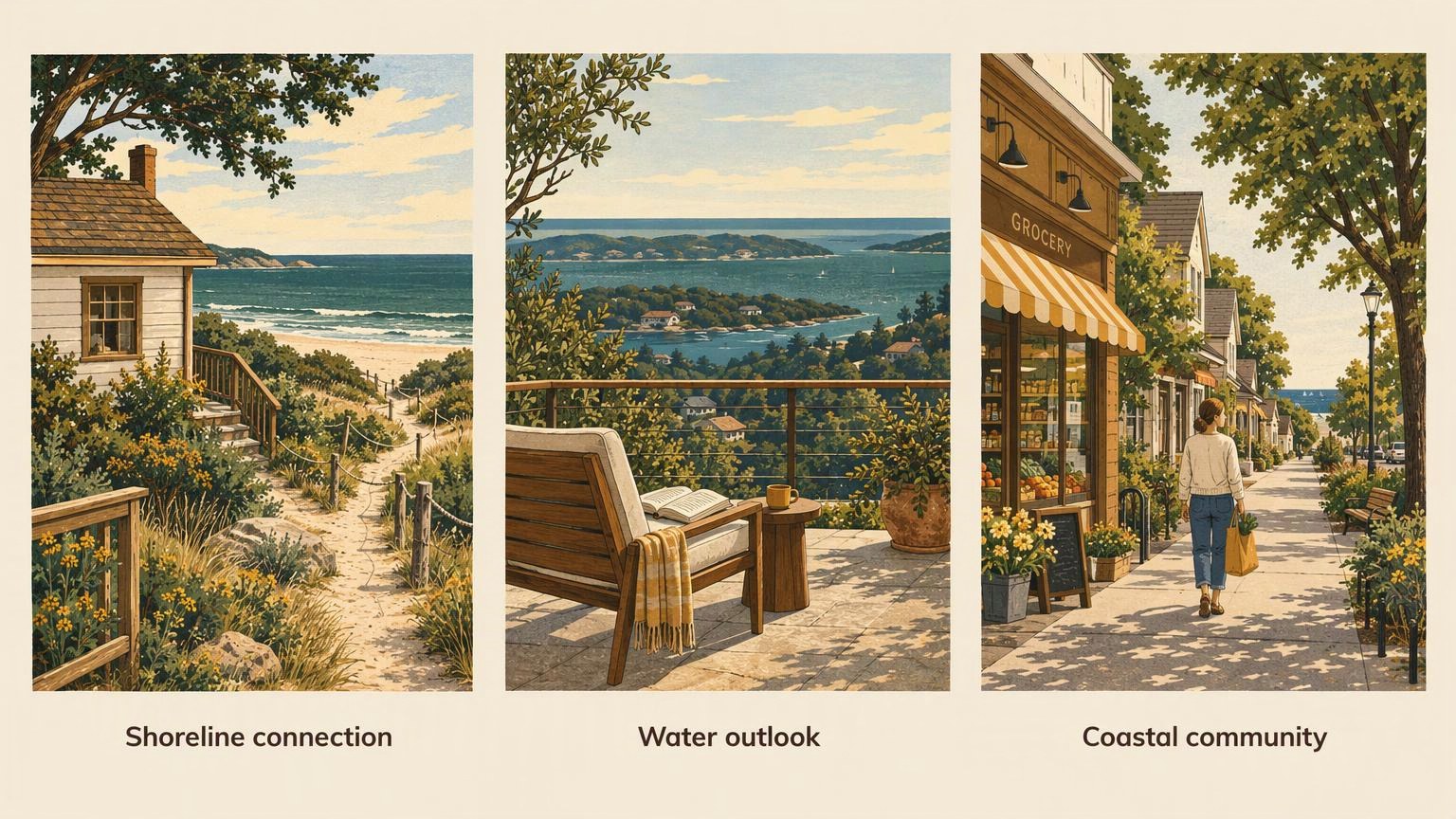
An illustration compares shoreline connection, water outlook and coastal community through a beachward path, a terrace overlooking water and a shaded neighborhood shopping street.
A buying example: when the view matters more than the shoreline
Say you want a second home where you can read outdoors, see the sea, and eventually spend longer periods in Mexico. You enjoy the beach, but your ordinary day also includes shopping, meeting people, and keeping up with the home.
A direct beachfront property initially sounds like the obvious fit. It matches the image you have in mind, but it also brings the shoreline boundary and access questions into the center of the comparison.
An ocean-view home could meet the visual priority without requiring the parcel itself to meet the shore. It would still need property-specific legal and technical review, and its beach access could be different from what the photograph suggests.
Between those two choices, the ocean-view category is a reasonable starting point if seeing the water matters more than reaching it directly from home. That is a lifestyle conclusion, not a finding about lower costs, easier ownership, or reduced risk.
Now change one detail: your main pleasure is leaving the home for the shore every day. Direct beachfront living deserves more attention because the connection to the water is central to your intended use. The exact access arrangement becomes a deciding fact rather than a minor detail.
The useful question is not whether beachfront is better. It is which experience you would miss if you chose something else. Once that priority is clear, the legal structure, documentation, condition, and costs can be evaluated without asking a sea view to answer every question.
Why the fideicomiso annual fee is only one budget question
The fideicomiso annual fee belongs in an ownership budget, but it does not represent the total cost of buying or keeping a coastal home. A fee comparison also does not tell you whether the property fits your use.
Keep acquisition expenses separate from recurring expenses. Professional and transaction charges relate to completing the purchase, while trust administration and property upkeep concern ongoing ownership. A current, written, property-specific estimate is more useful than an undated generic total.
Shared-property charges, management arrangements, and maintenance needs may add different obligations depending on the product. A standalone home and a unit with common facilities distribute responsibilities differently; neither category establishes a universal cost advantage.
Coastal condition matters to the budget discussion because technical findings can reveal work that a general ownership estimate does not address. Taxes and insurance require appropriately qualified professionals, and their treatment cannot be inferred from a trust fee.
Financing may be available for qualified U.S. buyers through licensed providers. Eligibility, property requirements, underwriting, rates, terms, fees, and approval apply.
The meaningful comparison is between documented obligations for the choices you are actually considering. A lower quoted administration fee cannot offset an unsuitable property, unclear rights, or ownership commitments that do not fit your plans.
How The Golden Life connects the property search to everyday life
The Golden Life begins with the life you want to live, then considers destination and property direction through that lens. For a beachfront search, that means distinguishing retirement, relocation, second-home use, and investment before treating coastal homes as interchangeable.
Its destination starting points have different settings. Riviera Maya combines Caribbean coastline, growing residential communities, and international access; Los Cabos combines a desert and Sea of Cortez setting with marina life, golf, and links to the United States.
Puerto Vallarta adds a mountain-framed bay, an established international community, neighborhood character, and everyday city services. These descriptions help frame lifestyle questions, not determine a particular property's ownership structure, healthcare suitability, or value.
For the broader buying framework, The Golden Life's Buy a Second Home or Invest in Mexico page puts property use alongside destination fit. Here, the narrower task is deciding how much the shoreline itself matters to your search.
Once you can distinguish a required beach connection from a preferred sea view, The Golden Life's Find your place provides a relevant next step: share your priorities and send an inquiry to The Golden Life.
That report request does not establish property availability, financing approval, terms, or a legal outcome. Transaction-specific decisions remain separate from destination and lifestyle direction.