
Expat communities in Mexico: where Americans live
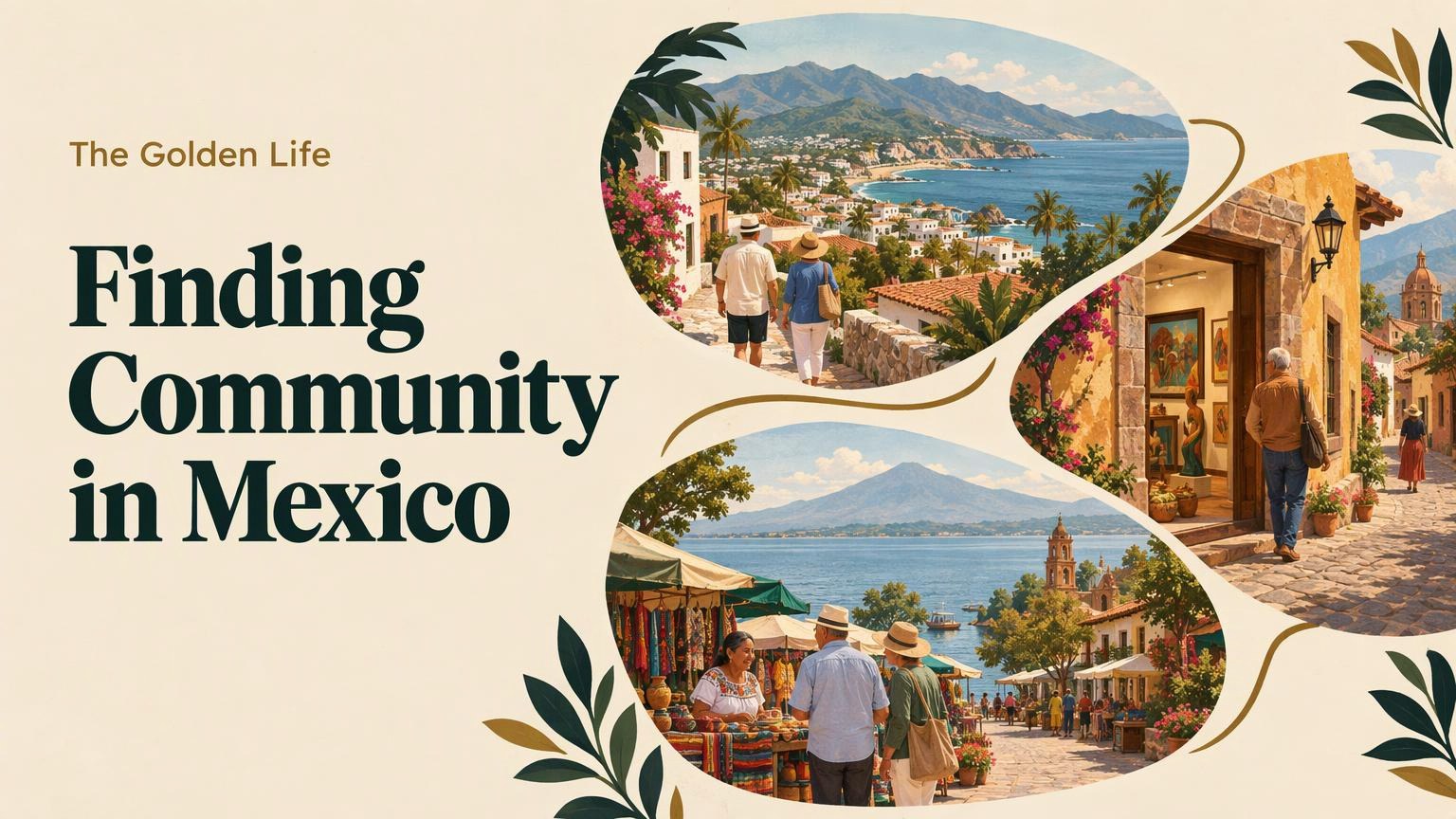
Americans live in a range of Mexican communities, including established retirement settings such as Puerto Vallarta, San Miguel de Allende, and Ajijic. Other settings worth exploring include the Riviera Maya, Los Cabos, and Baja California. These are different kinds of places, not a ranking: the useful choice depends on whether you want coastal city life, activity-centered living, highland culture, or a lakeside village routine.
Table of Contents
- What makes an expat community useful in retirement?
- Puerto Vallarta: coastal city life with neighborhood character
- Riviera Maya: Caribbean residential life rather than one beach-town identity
- Los Cabos: a setting for marina, golf, and amenity-centered interests
- Baja California: Pacific coast, wine country, and cooler coastal pockets
- San Miguel de Allende: highland culture and an established retirement setting
- Ajijic: lakeside village life, markets, and art
- Which retirement rhythm are you trying to build?
- Work through a choice before falling in love with a property
- Separate social fit from practical readiness
- Frequently Asked Questions
Finding expat communities in Mexico is only the beginning. For retirement, the more useful question is where you can build relationships and enjoy an ordinary week, with enough independence to manage everyday life.
The Golden Life's destination profiles cover Riviera Maya, Los Cabos, Puerto Vallarta, and Baja California. San Miguel de Allende and Ajijic add contrasting highland and lakeside settings to this educational comparison. None is a universal best choice, and this is not a population ranking. The focus is what each setting means for your routines, social life, and next stage of exploration.
What makes an expat community useful in retirement?
A recognizable American presence can make a destination easier to explore. But knowing that other Americans live somewhere does not tell you whether you will have friends, meaningful activities, or a comfortable daily routine there.
Look at the difference between meeting people and repeatedly seeing them. A lively restaurant might produce pleasant conversations; a recurring class, neighborhood activity, or shared interest gives a relationship more chances to develop. The useful evidence is participation, not simply a busy social calendar.
Also distinguish international community from an exclusively American circle. Retirement in Mexico can include relationships with Mexican neighbors and residents from other countries, alongside familiar language and cultural references.
The Golden Life's framework for living and retiring in Mexico places community alongside climate, accessibility, and connection to home. That broader view matters: a social setting you enjoy still needs to work with the rest of your life.
A retirement community is about the routines and relationships you want, not simply how many Americans live there.

Illustration contrasting a café greeting with a shared painting activity. A mustard cardigan appears in both scenes, while faint background groups suggest repeated participation.
Puerto Vallarta: coastal city life with neighborhood character
Puerto Vallarta combines a mountain-framed Pacific bay with an established international community and everyday city services. Its neighborhood character makes it worth considering if you want your retirement to extend beyond a resort setting.
The community question here is how you want to participate in a coastal city. Picture familiar errands, conversations with neighbors, and regular activities alongside time by the water. That differs from choosing a home primarily for its view or vacation atmosphere.
For someone who wants both international connections and a lived-in city environment, those characteristics provide a useful starting point. They do not mean every neighborhood delivers the same experience.
The trade-off is the need to choose at neighborhood level. During a visit, compare the streets where you would actually live with the areas where you enjoy spending an afternoon. Observe noise, building access, and the effort involved in your normal errands rather than treating the whole destination as one community.
If Puerto Vallarta’s neighborhood life appeals to you, consider how coastal city living fits your everyday retirement plans.
Riviera Maya: Caribbean residential life rather than one beach-town identity
The Riviera Maya is a Mexican Caribbean region with growing residential communities and international access. Its appeal combines a coastal setting with the practical question of how a particular residential area supports daily life.
Playa del Carmen and Tulum illustrate why a regional label is not enough. Playa del Carmen has a more urban beach-town setting, including walkable downtown areas and international grocery options. Tulum is associated with nature-focused and boutique communities, with a different infrastructure picture.
These differences affect how you might meet people. Someone who enjoys incidental contact while running errands may prefer a different setting from someone whose social life revolves around a particular activity or residential community.
The downside of comparing only Caribbean scenery is that it hides those differences. A beach preference can identify the region, but it cannot settle the neighborhood decision. Explore the residential setting itself, including the routes, shops, and recurring activities that would shape your week.
Los Cabos: a setting for marina, golf, and amenity-centered interests
Los Cabos, in Baja California Sur, brings together a desert landscape, the Sea of Cortez, marina life, golf, and polished amenities. Strong links to the United States are another part of its destination profile.
Those details make interests a useful starting point for community exploration. If boating or golf is already part of your life, investigate whether the activities you enjoy offer recurring participation and opportunities to build relationships.
There is an important distinction between enjoying an amenity and belonging to a community. A marina view does not establish a social circle, and a golf-oriented setting does not establish access, participation terms, or personal fit.
The trade-off is that attractive facilities can dominate a visit. Spend some of your exploration away from leisure settings and consider how ordinary days would feel. Los Cabos deserves consideration for its particular landscape and interests, not an assumption that an amenity-rich environment automatically creates the retirement you want.
Baja California: Pacific coast, wine country, and cooler coastal pockets
Baja California's destination profile includes Pacific coast, wine country, and cooler coastal pockets. Those characteristics offer a different starting point from tropical beach imagery and should be evaluated separately from Los Cabos.
Ensenada adds a concrete coastal example, with seafood, local wines, and outdoor activities among its destination characteristics. For a retirement planner, that suggests exploring whether food, outdoor interests, and familiar local routines could become part of a satisfying week.
The regional variety is also the limitation. A Pacific coastal preference and a wine-country preference are not interchangeable, and neither describes every residential setting in Baja California.
Use the region to identify the kind of environment you want, then narrow the question to an actual community. Cooler coastal pockets may interest someone who does not want a tropical setting, but comfort still depends on the place and season. A regional climate description cannot substitute for experiencing daily life where you might live.
San Miguel de Allende: highland culture and an established retirement setting
San Miguel de Allende is a central Mexican highland setting known for historic architecture, art, and cultural events. Its longstanding appeal to American retirees makes it a useful contrast to coastal destinations.
Here, the retirement question may begin with what you want to do rather than which shoreline you prefer. Galleries, creative interests, and cultural participation provide a different basis for community exploration from marina or beach-centered activities.
That distinction matters if you want purpose as well as leisure. A destination's artistic identity is most useful when it connects with something you would actually pursue, whether as a participant, learner, or regular visitor.
The trade-off is that admiration for historic streets and architecture does not establish ease of daily living. Assess your actual routes and building access during a visit. If cultural life is the attraction, investigate recurring activities rather than assuming that a calendar of events will naturally lead to lasting friendships.
Ajijic: lakeside village life, markets, and art
Ajijic sits on the shores of Lake Chapala and is an established expat retirement setting. Its village character, murals, art galleries, and local markets provide a lakeside alternative to coastal city life.
The appeal is a particular daily texture: familiar streets, market visits, and artistic interests within a village setting. For someone who wants repeated contact with familiar faces, that is a different starting point from a destination built around a broad range of city amenities.
Still, a close-knit reputation does not guarantee that a newcomer will find the right circle. Explore how people participate, whether activities match your interests, and whether you enjoy the everyday rhythm rather than only the appearance of the village.
The trade-off is scale. A smaller setting can suit someone who likes familiarity, while another person may want more variety in daily surroundings. Neither preference is better. The useful test is whether a lakeside village routine feels satisfying after the novelty of arrival fades.
| Destination | Setting | Interests to… |
|---|---|---|
| Puerto Vallarta | Pacific coastal city | Neighborhood life and regular activities |
| Riviera Maya | Caribbean residential communities | Errands, shops, and recurring activities |
| Los Cabos | Desert and Sea of Cortez | Marina life and golf |
| Baja California | Pacific coast and wine country | Food, local wines, and outdoor activities |
| San Miguel de Allende | Central Mexican highlands | Art and cultural participation |
| Ajijic | Lakeside village | Markets, galleries, and familiar faces |
Which retirement rhythm are you trying to build?
Searching for the best cities in Mexico for expats can hide a more personal choice: whether you want a full-time home, a seasonal base, or a place for occasional stays. The same destination may feel different under each pattern.
Compare your intended rhythm before interpreting a community's social appeal. A busy calendar during one visit does not establish what your own experience would be throughout the year.
| Living pattern | Community priority | Main trade-off | Useful evidence |
|---|---|---|---|
| Full-time retirement | Relationships and routines that continue throughout the year | A strong visitor-season social scene may not reflect the rest of the year | Recurring participation and conversations with year-round residents |
| Seasonal living | Activities and relationships that overlap with your time in Mexico | Friends may arrive and leave on different schedules | Activity calendars and residents' actual seasonal patterns |
| Occasional stays | Easy re-entry into familiar routines | Short stays provide fewer chances to develop deeper relationships | Whether you can resume the activities and contacts you value |
Evaluate belonging separately from convenience
Convenience helps you function; belonging gives you reasons to participate. Both matter, but a shop with familiar products and an English-language conversation are different kinds of support.
For American expats in Mexico, a useful exploration includes both. Notice whether you can manage everyday tasks and whether you want to return to the same people and activities.
Work through a choice before falling in love with a property
Say you are considering retirement in Mexico because you want more time for art and regular social contact. You enjoy the ocean on vacation, but beach activities are not part of the week you actually want to build.
Puerto Vallarta gives you a coastal city setting with an established international community. San Miguel de Allende puts highland culture and artistic interests at the center of the comparison. Ajijic adds a lakeside village setting with galleries and markets.
On those priorities, the cultural or village settings deserve exploration alongside the coast. An ocean-view property should not settle the question before you have compared the activities and relationships that matter to you.
Now change the priority: golf and marina life are central to your routine. Los Cabos becomes more relevant because those interests are part of its destination profile. The choice changes because your intended life changes, not because one place outranks another.
The Golden Life's Find your place follows that priorities-first approach: share your priorities and send an inquiry to The Golden Life. It is a starting point for exploration, not a promise of property availability or approval.

Illustration of a planning sheet comparing art, golf and boating motifs with painted landscape scenes. A hand holds a pencil, while a seaside house sketch sits separately below.
Separate social fit from practical readiness
A welcoming social experience does not answer healthcare, insurance, residency, tax, safety, or property questions. Keep those decisions separate so enthusiasm about a community does not become assumed certainty about everything else.
For healthcare and insurance, use qualified independent medical and insurance professionals to evaluate your circumstances. Community recommendations can help you identify questions, but they do not establish suitability, coverage, or access for you.
Residency, legal, tax, financing, and investment questions also require appropriately qualified independent professionals. This article is general educational information, not professional advice, and no outcome is guaranteed.
For lifestyle fit, ordinary observation remains valuable. Spend time in the residential streets you are considering, try the errands you expect to make, and ask participants how recurring activities work. Record what you experienced separately from what someone suggested.
That separation produces a better destination comparison: personal evidence about daily life, current documentation for material facts, and professional guidance for decisions that require it.