
Living in Tulum: Cost of Living, Long-Term Rentals and Neighborhoods

Living in Tulum means a hot, humid beach town of under 50,000 people that has grown very fast. Most residents live in town, Aldea Zama, La Veleta or Region 15 rather than on the beach. Your biggest costs after rent are usually electricity for air conditioning, water and internet, and these vary a lot by building. Rent for a few months, including part of the summer, before committing to anything long term.
Table of Contents
- What is it like to live in Tulum?
- Which Tulum neighborhood fits you?
- How do long-term rentals in Tulum work?
- What does it cost to live in Tulum?
- What is Tulum's weather like by month?
- Healthcare, airports and getting around
- Two rentals compared: which would you pick?
- Thinking of buying in Tulum?
- Frequently Asked Questions
Tulum looks different on a two-week holiday than it does in an ordinary month of living there. This guide covers what changes when you live in Tulum: where people actually live, how long-term rentals work, which monthly costs catch newcomers out, and what the weather and seaweed seasons mean for daily life.
What is it like to live in Tulum?
Tulum is a town in Quintana Roo, on Mexico's Caribbean coast, about 130 km (80 miles) south of Cancun. The 2020 census counted about 47,000 people in the municipality, and it has grown quickly since. Life revolves around the beach, cenotes (natural sinkhole pools), the Mayan ruins and the jungle.
Three things shape daily life more than visitors expect:
| Topic | What it means day to day |
|---|---|
| Seasons | High season runs roughly December to April, with more visitors, traffic and higher short-term rents. Summer is quieter, hotter and rainier. |
| Growth | Many neighborhoods are new. Roads, street lighting, water and internet can differ from one block to the next. |
| The beach | The beach is a few kilometres from town. Most residents drive or cycle to it rather than living on it. |
Which Tulum neighborhood fits you?
Tulum is spread out, so the neighborhood decides how you get around and what is within reach. These are the main residential areas.
| Area | Character | Good for | Check before renting |
|---|---|---|---|
| Tulum Centro (town) | The original town along Highway 307. Shops, markets, restaurants, banks. | Walking to errands, everyday services, local feel | Street noise, parking, air conditioning |
| Aldea Zama | Planned area between town and the beach. Condos with pools, paved streets. | Being closer to the beach with finished infrastructure | HOA rules, building age, what the rent includes |
| La Veleta | Residential area southwest of town. Mix of houses and condos. | Quieter living within cycling distance of town | Which streets are paved, internet options |
| Region 15 | Newer area northwest of town, with many recent condo buildings. | Lower rents and newer units | Unpaved roads, water supply, fibre internet, distance to the beach |
| Beach road (Zona Hotelera) | Hotels and beach clubs along the coast. | Short stays and holidays | Most places are hotels, not long-term homes; costs are highest |
Region 15 in more detail
Region 15 has attracted a lot of new building because land there was cheaper. That means newer apartments and lower rents, but some streets are still dirt roads, and services depend on the building. Before renting, drive the route at night and after rain, and ask the landlord whether the building has municipal water or relies on tank deliveries, and which internet provider serves it.
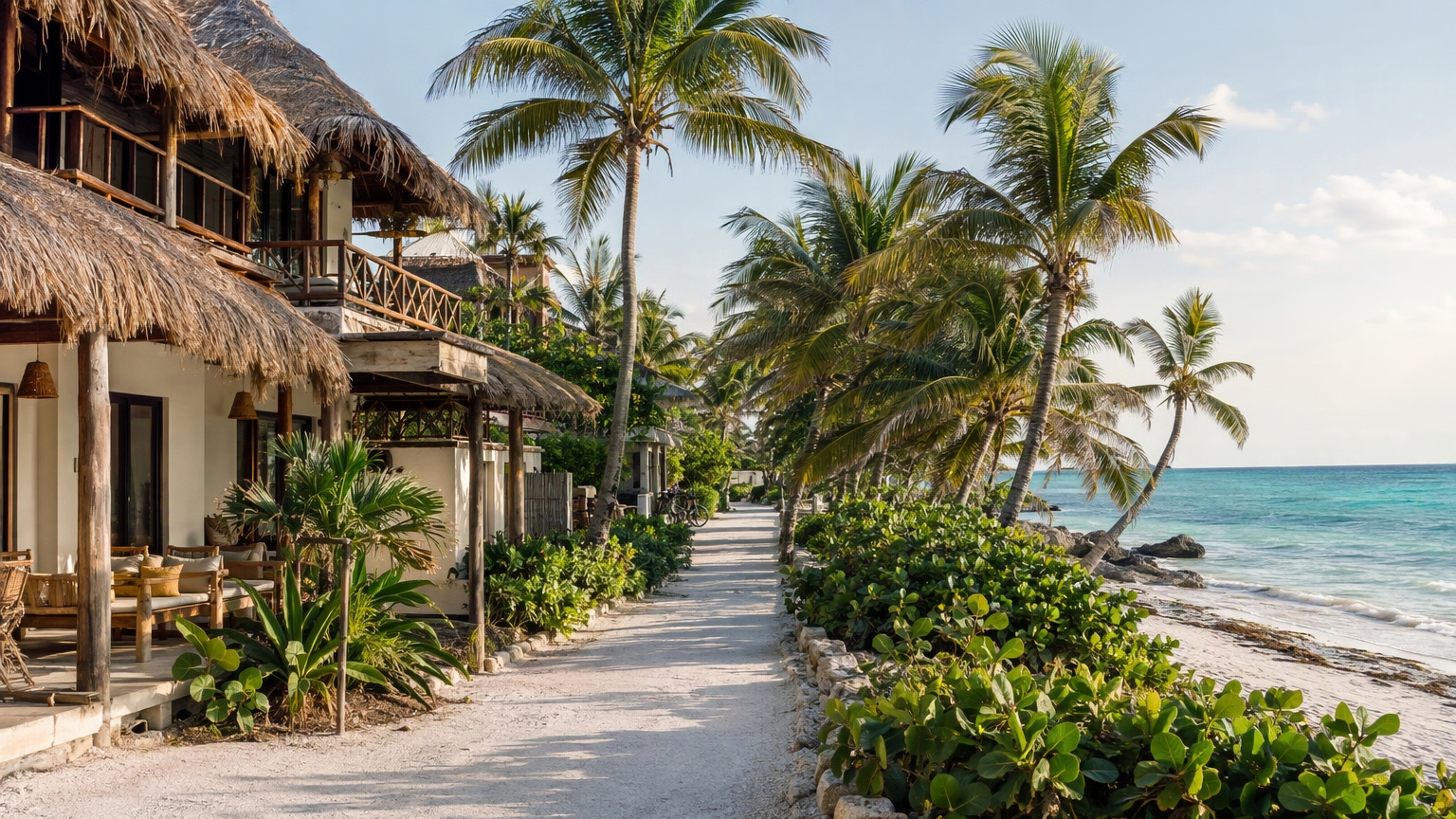
Most Tulum residents live in town or the neighborhoods around it, not on the beach.
How do long-term rentals in Tulum work?
Much of Tulum's housing is built for holiday rentals, so long-term listings compete with short-term prices, especially in high season. Asking for a stay of six months or more often gets a lower monthly rate than the nightly price suggests.
What to expect from a typical long-term rental:
| Question | Why it matters |
|---|---|
| Is it furnished? | Most long-term rentals in Tulum are furnished. Check the kitchen, beds and air conditioning in every room you will use. |
| What does the rent include? | Some rents include HOA fees, water, internet or cleaning. Others include nothing. Get it in writing. |
| How is electricity billed? | Ask whether the bill is in your name or the owner's, and what recent bills were in the hot months. |
| Where does the water come from? | Some buildings use municipal water, others use tank deliveries (pipas). Ask how often deliveries come and who pays. |
| Which internet provider? | Fibre is available in parts of town; newer areas may rely on slower options or satellite. Test the speed if you work from home. |
| Deposit and lease length? | Landlords usually ask for the first month plus a deposit. Agree the lease length, deposit return terms and notice period in a written contract. |
Start with a furnished rental for one to three months, then look for a longer lease once you know which area you prefer. Seeing listings in person is much easier when you are already in town.
Planning a longer stay in Tulum?
What does it cost to live in Tulum?
Tulum is one of the more expensive places to live in Mexico, mainly because of rent and electricity. Rather than relying on a single monthly figure, build your own budget from these categories and get current quotes for the place you are considering.
| Cost | What drives it | Tip |
|---|---|---|
| Rent | Area, season, furnishings, whether it is priced for holiday or long-term use | Negotiate a monthly rate for six months or longer |
| Electricity (CFE) | Air conditioning. Heavy users can be moved to CFE's high-consumption DAC tariff, which costs much more per unit. | Ask for recent summer bills before signing |
| Water | Municipal supply or tank deliveries | Confirm who pays and how often deliveries come |
| Internet | Fibre availability on your street | Check providers by address before renting |
| Transport | Distance to town and the beach | A car, scooter or bike is usually needed outside the centre |
| Groceries and dining | Supermarkets and markets in town; beach restaurants cost far more | Cooking at home makes the biggest difference |
| Health insurance | Private cover or IMSS voluntary enrollment | See our guide to health insurance and IMSS |
For a wider budget across Mexico, see retiring in Mexico on a budget.
What is Tulum's weather like by month?
Tulum is warm all year. The real differences are rain, humidity and seaweed.
| Months | Conditions | What it means for daily life |
|---|---|---|
| December to February | Warmest days are pleasant, nights are mild, little rain | Peak visitor season: busy beaches and higher short-term rents |
| March to May | Getting hotter and more humid, still mostly dry | Seaweed can start to arrive in some years |
| June to August | Hot and humid, regular afternoon storms | Hurricane season begins 1 June; seaweed is often heaviest |
| September to October | Usually the wettest months | Peak of hurricane season; quietest time in town |
| November | Rain eases, temperatures drop slightly | Hurricane season ends 30 November; visitors return |
Sargassum seaweed
Sargassum is a brown seaweed that washes up on Caribbean beaches, usually between spring and late summer. Some years are heavy and some are light. If daily beach time is the main reason you are moving, spend part of a summer in Tulum before committing, and follow the Quintana Roo sargassum traffic-light report (semaforo de sargazo), which rates each stretch of coast.
Hurricanes
The Atlantic hurricane season runs from 1 June to 30 November. For a rental or purchase, ask how the building handled past storms, whether it has storm shutters, and what the landlord or HOA does when a storm warning is issued.
Healthcare, airports and getting around
| Need | Where |
|---|---|
| International flights | Tulum International Airport (TQO), opened December 2023, south of town. Cancun (CUN) has the most routes, about 2 hours by road. |
| Train | The Tren Maya has a Tulum station, connecting to Playa del Carmen, Cancun and other Yucatan cities. |
| Everyday healthcare | Clinics, pharmacies and dentists in town. |
| Larger private hospitals | Playa del Carmen (about 1 hour) and Cancun (about 2 hours). |
| Getting around town | Bicycle, scooter, car or taxi. Distances are longer than they look on the map. |
If you have ongoing medical needs, check which specialists are available locally and how far you would travel for the rest. Our guides to healthcare in Mexico for retirees and health insurance and IMSS cover coverage options.
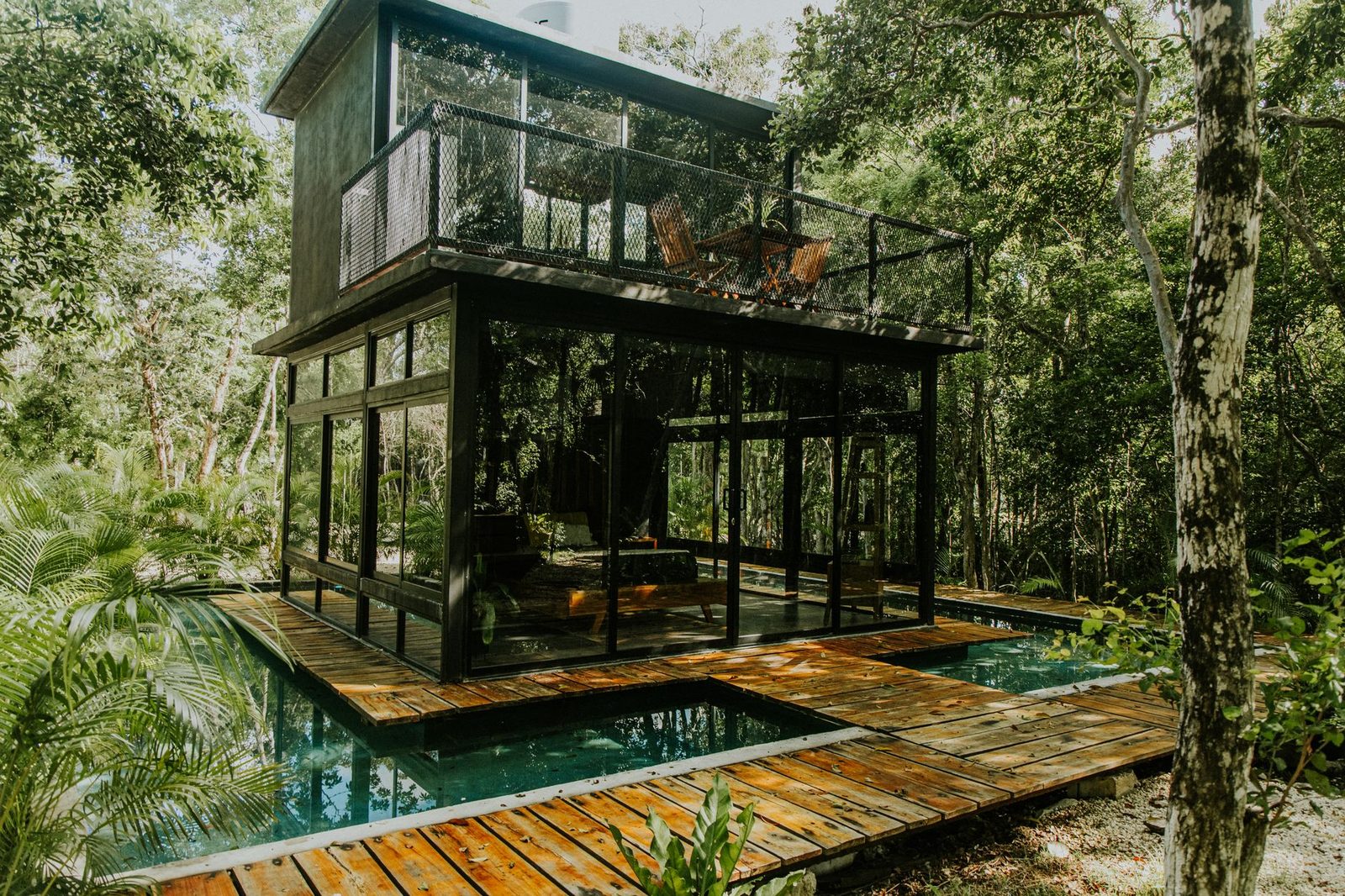
Jungle homes are common in Tulum, but check access roads, water and power. Photo: Amar Preciado / Pexels
Two rentals compared: which would you pick?
Say you plan to spend six months in Tulum and have found two furnished apartments. One is a new condo in Region 15 with a rooftop pool and a lower rent. The other is in Aldea Zama, costs more, and is about 10 minutes closer to the beach by bike.
| Region 15 condo | Aldea Zama condo | |
|---|---|---|
| Rent | Lower | Higher |
| Road access | Partly unpaved street | Paved |
| Water | Tank deliveries | Municipal supply |
| Internet | Fibre not yet on the street | Fibre available |
| Beach | Car or scooter needed | Cycling distance |
If you work from home and want a daily beach routine, the Aldea Zama apartment is likely the better choice, even at a higher rent: reliable internet and an easy ride to the beach are what you would use every day. If you mainly want a lower monthly cost and are happy to drive, the Region 15 apartment works, as long as you budget for transport and confirm water deliveries.
Thinking of buying in Tulum?
Tulum is in Mexico's restricted zone, so foreign buyers hold residential property through a bank trust (fideicomiso). Much of what is for sale is pre-construction, so check permits, the developer's track record and what happens to your deposit if delivery is late. Rental income is never guaranteed, and Tulum has a lot of holiday rental supply.
Read buying pre-construction property in Mexico and how to verify a developer first. Tulum developments in our collection include Adonahi Tulum, Selva Norte, Zénesis and Aldea Uh May. Confirm current availability, pricing and terms directly, and use an independent lawyer.
Still comparing destinations? See Merida vs San Miguel de Allende vs Tulum vs Ajijic.